

At Modulus Cleanrooms, we understand that building a cleanroom within an existing structure presents unique challenges and opportunities. Unlike new construction, where clean rooms are designed from the ground up with precise environmental controls in mind, retrofitting an existing space requires careful planning to meet strict cleanliness standards.
Whether for biotechnology research or electronics production, well-designed clean rooms must control airborne particles, temperature, humidity, and airflow while complying with industry regulations.
Here are the steps Modulus Cleanrooms recommends for constructing modular cleanrooms in your existing structure:
Clean rooms operate under strict classifications determined by the International Organization for Standardization (ISO). The classification system, ranging from ISO 1 (the most stringent) to ISO 9 (least stringent), dictates the maximum allowable particle count per cubic meter of air. Understanding the classification level necessary for your operations will guide the design and engineering process.
Cleanroom environments must also adhere to regulatory requirements, such as the FDA’s Current Good Manufacturing Practices (cGMP) for medical device industries or specific industry standards for semiconductor manufacturing. Ensuring compliance from the outset prevents costly modifications later.
Once you understand the requirements, the next step in cleanroom construction within an existing space is assessing the current space. Structural integrity, available utilities, ceiling height, and ventilation capabilities must all be considered.
Retrofitting an existing building introduces constraints that require innovative solutions. For instance, older space may not have sufficient HVAC capacity to maintain the required temperature, humidity, and air pressure levels.

Space constraints also influence cleanroom layout. While modular cleanroom systems allow for flexibility, larger modifications may require rerouting utilities, reinforcing floors, or adjusting ceilings. Evaluating the infrastructure helps determine the feasibility of a cleanroom renovation without compromising operational efficiency
Once the structural assessment is complete, designing the cleanroom layout is the next critical step. The design must incorporate essential elements such as airlocks, gowning rooms, and material pass-throughs to minimize contamination risks. A well-thought-out layout ensures an efficient workflow while maintaining the cleanroom’s integrity.
One major consideration is airflow control. Cleanrooms rely on High-Efficiency Particulate Air (HEPA) or Ultra-Low Penetration Air (ULPA) filtration systems to remove airborne contaminants. The placement of air handling units and filtration systems must be optimized to maintain unidirectional airflow, reducing turbulence and preventing particle buildup.
Proper airflow design also contributes to maintaining differential pressure, which is crucial for preventing cross-contamination between clean and unclean areas. Another important aspect of cleanroom design is material selection. Surfaces should be non-porous, smooth, and easy to clean to prevent particle accumulation.
Walls, ceilings, and floors must be resistant to chemicals and disinfectants used in routine cleaning. Additionally, lighting fixtures should be sealed to prevent particle generation and ensure compliance with cleanroom standards.

Cleanrooms require precise temperature, humidity, and particulate control, which often necessitates upgrading the existing HVAC system. Traditional HVAC systems in commercial or industrial buildings are not designed to meet stringent cleanroom requirements. Therefore, modifications such as increasing air exchange rates, installing HEPA or ULPA filters, and ensuring proper pressurization are essential.
Air handling units (AHUs) play a significant role in cleanroom construction. These units regulate airflow, temperature, and humidity while filtering out contaminants. Depending on the cleanroom classification, the air change rate may vary significantly.
Higher classifications require more frequent air changes per hour, increasing the demand on the HVAC system. Properly designed air circulation minimizes dead zones where particles can accumulate.
Another factor to consider is differential pressure. Clean rooms often operate with positive or negative pressure relative to surrounding areas. For example, biosafety laboratories may require negative pressure to contain hazardous substances. Retrofitting an existing building to achieve the correct pressure balance requires precise engineering and airtight sealing of walls, ceilings, and doorways.
Electrical and utility requirements for cleanroom renovations differ significantly from standard commercial or industrial spaces. The proper placement of electrical outlets, lighting fixtures, and control panels is critical for maintaining functionality while ensuring compliance with cleanliness standards. Sealed lighting fixtures reduce particle generation, while strategically placed outlets and conduits prevent contamination from exposed wiring.

Cleanroom renovations also require specialized plumbing and gas lines for processes such as pharmaceutical production or semiconductor fabrication. These systems must be designed to prevent leaks and maintain a contamination-free environment. Additionally, backup power systems are often necessary to ensure continuous operation in case of power failure.
Retrofitting an existing structure for cleanroom use often benefits from modular construction techniques. Modular cleanrooms offer flexibility and efficiency compared to traditional stick-built construction. Prefabricated wall panels, ceiling systems, and flooring can be quickly installed while maintaining strict cleanliness standards. This approach minimizes on-site contamination risks and reduces downtime.
Sealing gaps and preventing particle intrusion is another critical construction requirement. The use of hermetically sealed doors, seamless wall-to-floor transitions, and airtight windows ensures that contaminants do not enter the cleanroom environment. Construction materials should be chosen based on durability, chemical resistance, and compliance with regulatory standards.
Once building construction is complete, rigorous testing and validation must be conducted to ensure compliance with cleanroom standards. This process includes particle count testing, airflow visualization, air pressure differential measurements, and temperature/humidity monitoring. Certifying the cleanroom according to ISO standards or industry-specific regulations ensures that it meets operational requirements before production begins.
Routine maintenance and monitoring are also essential to maintaining cleanroom integrity over time. Regular inspections, air quality testing, and filter replacements help sustain the controlled environment. Implementing a strict cleaning and gowning protocol for personnel working inside the cleanroom further reduces contamination risks.
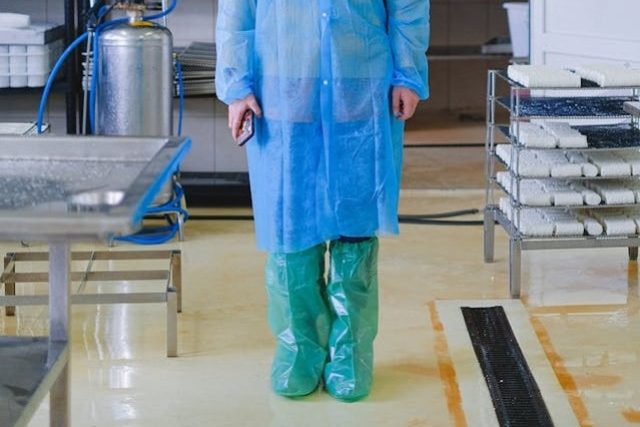
Constructing a cleanroom within an existing structure presents unique challenges, but with careful planning and execution, it is possible to achieve a high-performance controlled environment. Understanding regulatory requirements, evaluating the existing infrastructure, optimizing airflow and filtration systems, and implementing effective construction techniques are key to a successful project.
Whether for electronics manufacturing or biotechnology research, cleanrooms play a critical role in ensuring product quality and process reliability. Retrofitting an existing facility requires collaboration between architects, engineers, and cleanroom specialists to create an environment that meets industry standards while maintaining operational efficiency.
With the right approach, cleanroom construction can be seamlessly integrated into an existing structure, supporting innovation and high-quality manufacturing processes. For assistance, contact Modulus Cleanrooms.