
In medical cleanroom environments, where precision and contamination control are essential, the ceiling system often plays a bigger role than people expect. Along with fan filter units (FFUs), the ceiling directly supports airflow control, pressure regulation, and cleanroom classification. A well-designed ceiling doesn’t just hold up lighting and equipment; it anchors the performance of the entire cleanroom.
At Modulus Cleanrooms, we specialize in building modular cleanroom systems where every component is built with purpose, from ceiling panels to airflow design, you get a space that supports compliance, control, and long-term efficiency.
The ceiling might not be the first feature that comes to mind when planning a cleanroom, but it plays a key role in performance. It’s where air is filtered and distributed, where utilities are integrated, and where cleanroom classifications are upheld.
Fan filter units work together with the ceiling grid to support positive pressure, consistent air exchange rates, and laminar airflow. When installed correctly, this setup supports compliance with ISO 14644 guidelines, helps maintain cleanliness targets, and ensures proper integration with lighting and fire protection systems.
In regulated environments, these systems also help teams meet expectations from agencies like the FDA and ensure cleanroom operations align with current good manufacturing practices (cGMP). With the right design, ceiling systems can support both regulatory goals and operational flexibility.
Most cleanroom ceilings fall into two main categories: T-grid and walkable. Each offers distinct advantages depending on how the cleanroom will be used and maintained.
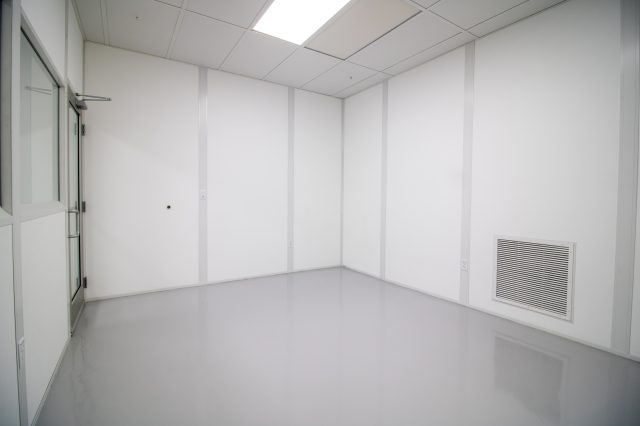
T-grid ceilings are lightweight and cost-effective, making them a popular option in many cleanrooms. They’re designed to support ceiling tiles, FFUs, and lighting fixtures in a suspended grid. For many applications, this approach provides the stability and modularity needed to adapt over time.
Walkable ceilings, on the other hand, are designed to carry the weight of personnel, which makes them ideal in situations where technicians may need access to systems above the ceiling. These systems allow teams to perform maintenance, inspections, or upgrades without entering the cleanroom itself. This minimizes disruption and can make maintenance much easier in the long run.
In medical environments where access and control are equally important, walkable ceilings offer a strong balance between performance and practicality.
Ceiling panels in cleanrooms must be carefully selected based on the needs of the space. Common materials include powder-coated steel, aluminum, and composite panels, all of which offer different levels of durability and cleanability.
Materials need to resist corrosion, withstand repeated cleanings, and be compatible with ISO-rated environments. Anti-microbial coatings and smooth finishes are often preferred in medical spaces to reduce the risk of particle accumulation and support easy wipe-down procedures.
No matter what ceiling system you choose, it’s important to make sure every component fits securely and flush. Any gaps or misalignments can disrupt airflow or introduce particle buildup. Ceiling systems should also be designed with proper integration points for lighting, fan filter units, fire sprinklers, and utilities.

Coordination with HVAC and electrical systems during the design phase helps ensure seamless installation and long-term efficiency.
Fan filter units are a key part of any cleanroom ceiling system. They house HEPA or ULPA filters and actively move air into the cleanroom while capturing particles before they enter the space. In medical cleanrooms, FFUs help create consistent laminar airflow and support positive pressure differentials that keep contaminants out.
By pushing filtered air from the ceiling downward, FFUs support the air changes per hour (ACH) required to meet specific ISO class levels. These air changes are essential for diluting and removing any contaminants generated within the space.
Choosing the right FFU involves more than just selecting a filter. HEPA filters are the standard for most medical and research cleanrooms, capable of capturing 99.97% of particles down to 0.3 microns. ULPA filters offer even higher efficiency, removing 99.9995% of particles down to 0.12 microns, and are often used in more sensitive applications.
Your selection should be based on your cleanroom’s ISO classification, required ACH, and the types of processes taking place inside. FFU performance is also affected by factors like motor efficiency, noise levels, and energy consumption, which all contribute to long-term operating costs. The number of FFUs required depends on the size of the space and the target classification.
FFU placement plays a critical role in how air moves through the cleanroom. Units should be spaced to distribute air evenly, minimize turbulence, and avoid creating areas where particles could settle or recirculate.

It’s also important to pair FFUs with properly placed return air grilles or ducted returns. This helps support directional airflow and maintains balanced pressure relationships between clean and less-clean spaces. With careful planning, FFUs and ceiling design can work together to maintain ideal flow patterns and keep the cleanroom within performance targets.
A cleanroom ceiling is only as effective as the systems supporting it. Fan filter units need to work in harmony with the facility’s HVAC system to control temperature, humidity, and pressure. This integration also helps ensure that airflow remains steady across operating conditions.
Digital control systems can be used to manage FFU speeds, monitor air pressure, and track filter performance. These systems provide real-time data and alerts so teams can respond quickly if performance begins to shift.
Smart integration also helps reduce energy consumption by optimizing airflow based on demand, making it easier to balance efficiency with performance. By tying FFUs into a central building management system, cleanroom operators gain more visibility and control over their environment.
Modulus Cleanrooms offers turnkey services that combine smart engineering with hands-on experience. Every cleanroom we build is tailored to the unique needs of the project. We guide clients through design, engineering, installation, and testing to make sure every component performs as expected.

Our ceiling systems and FFU setups are chosen based on performance requirements, budget, and long-term usability, ensuring your cleanroom supports both compliance and day-to-day operations.
The ceiling and filtration system are more than just background infrastructure. They directly affect how your cleanroom performs, how easy it is to maintain, and how confidently your team can meet quality targets.
With the right design, your ceiling supports airflow patterns, cleanability, and utility integration. And with the right FFUs, your cleanroom stays well within ISO class requirements while remaining energy efficient.
If you’re building a new cleanroom or upgrading your existing space, Modulus Cleanrooms is here to help you get it right from the top down. Let’s talk about your cleanroom goals and how we can help bring them to life.