
Cleanroom demand is surging across industries. As new innovations continue to push the limits of what’s possible, cleanroom environments are evolving to keep up. From smarter systems and stricter global standards to growing pressure around sustainability and performance, the cleanroom of the future looks a lot different from what it did just a decade ago.
Forward-thinking companies are adapting quickly, not only to meet regulatory expectations but to stay competitive in fast-moving fields. At Modulus Cleanrooms, we’re helping clients anticipate what’s next with cleanroom systems that are ready for the future.
Automation is already changing how cleanrooms operate, and that trend is only gaining momentum. Robotics is helping reduce the need for manual handling, which lowers the risk of particle introduction and increases overall efficiency. Whether it’s moving materials, performing inspections, or handling packaging, robotic systems are becoming essential tools for improving yield and reliability.
In cleanroom environments, even small improvements in precision and consistency can make a big impact. Robotic systems can work around the clock, follow strict routines, and operate in spaces where human access might be limited or less efficient. For advanced manufacturing processes that require repeatability and accuracy, automation adds another layer of confidence and control.

What’s more, these systems help reduce the wear and tear associated with manual tasks. In industries like AI hardware and medical device assembly, where product integrity is critical, robotics provides added assurance that cleanroom operations will stay consistent from start to finish.
Another area seeing exciting developments is the use of new materials and surface finishes inside cleanrooms. Today’s cleanrooms aren’t just about air control; they’re also about using materials that actively support contamination prevention and long-term durability.
Materials with antimicrobial properties are making surfaces more hygienic, which is especially valuable in labs where sterility is important. Smooth, non-porous finishes are also gaining traction because they resist particle buildup and make cleaning much more effective. When cleanroom walls, ceilings, and flooring are easier to sanitize, teams can spend less time managing contaminants and more time focused on their core work.
These material innovations also support sustainability. Durable panels and coatings last longer, which reduces the need for replacement and lowers lifecycle costs. For companies planning long-term cleanroom use, material upgrades help future-proof facilities and keep operating budgets more predictable.
Cleanroom airflow and filtration systems are getting smarter and more efficient. Advanced HEPA and ULPA filters can now trap even finer particles, which supports higher ISO classifications and greater process reliability.

But it’s not just about the filters themselves. The way air moves through a cleanroom matters just as much. Many modern cleanrooms are adopting unidirectional airflow systems that help maintain consistent air movement from the ceiling to the floor. This setup reduces the chances of particle recirculation and supports positive pressure across critical areas.
Adaptive filtration systems are another promising development. These technologies can respond to environmental conditions in real-time, adjusting flow rates and filtration levels as needed. That kind of flexibility helps maintain optimal performance even when production demands shift or occupancy levels fluctuate.
The cleanroom of the future isn’t just cleaner. It’s greener, too. With energy consumption becoming a key consideration in facility design, many organizations are adopting energy-efficient HVAC systems, smart lighting controls, and sustainable building materials.
HVAC systems account for a large share of cleanroom energy use, so optimizing them can bring immediate benefits. Variable speed fans, demand-based control systems, and properly sealed ductwork all help reduce energy waste without compromising performance. Meanwhile, LED lighting offers a lower-heat, longer-lasting option for cleanroom illumination.
Smart control systems can monitor these utilities in real time, giving facility managers the insights they need to fine-tune performance. This not only improves energy efficiency but also supports regulatory compliance and consistent environmental control.

Sustainability is more than a buzzword now. It’s part of how cleanrooms are expected to operate. As companies strive to meet environmental goals, energy-efficient cleanrooms offer a path forward that balances innovation with responsibility.
Digital technology is playing a bigger role in cleanroom management, with IoT-based systems bringing new levels of insight and control. Sensors can now monitor temperature, humidity, pressure, and particle counts in real time, feeding data to centralized systems that track performance and flag irregularities.’
With the right analytics in place, teams can predict when filters need replacing, when systems require maintenance, or when a room is drifting outside of acceptable environmental thresholds. This helps reduce downtime and ensures that production stays on track.
Smart cleanrooms also allow for remote management. With access to data from a desktop or mobile device, operators can make informed decisions quickly, even when they’re off-site. That kind of responsiveness can be a game-changer in fast-paced industries like AI chip development or advanced medical device prototyping.
As monitoring technology continues to improve, expect to see even more cleanrooms designed with smart systems from the ground up.
Cleanroom regulations are becoming more comprehensive, especially as industries expand into global markets. ISO classifications are still the foundation, but regional and industry-specific standards are adding complexity to the compliance landscape.
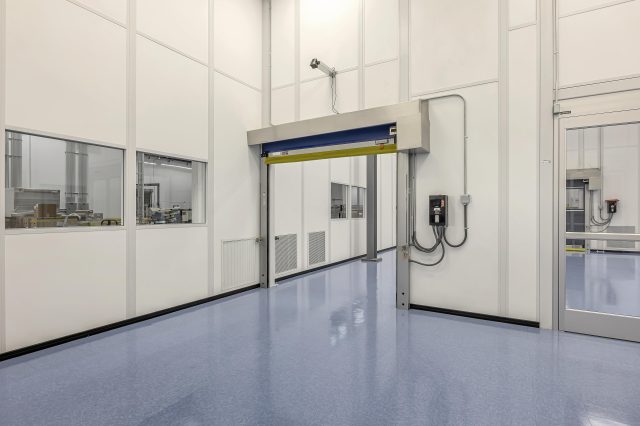
For many companies, staying aligned with international regulations is part of day-to-day operations. That’s why new cleanroom facilities need to be designed with adaptability in mind. As standards shift, cleanrooms should be easy to update or reconfigure without requiring full-scale construction changes.
Modular cleanrooms are quickly becoming the preferred solution for modern operations. Their flexibility, speed of deployment, and scalability make them a strong fit for industries with evolving space and process needs.
Rather than starting from scratch every time a project grows, modular systems allow teams to add, reconfigure, or relocate cleanroom space as needed. This approach supports everything from small-scale prototyping to large-volume production without locking you into a static layout.
Customization is another key benefit.
Cleanroom innovation is moving faster than ever before, and the trends shaping the future are all about smarter systems, cleaner environments, and better ways to scale. From robotics and real-time monitoring to modular construction and sustainable design, cleanrooms are no longer just controlled spaces. They’re tools for innovation and competitive advantage.
At Modulus Cleanrooms, we’re proud to help companies lead the way with cleanroom systems that are ready for tomorrow. Our systems are engineered to meet today’s expectations while making it easy to evolve as requirements change. That’s how we help clients stay prepared for what’s ahead. Contact us today for a consultation or to learn more about our services.