

Cleanrooms play a crucial role in industries such as biotechnology, electronics, and medical device manufacturing, where controlling contamination is essential to product quality and safety. This article by Modulus Cleanrooms will provide you with a comprehensive overview of proper gowning techniques, an essential step in maintaining cleanroom integrity and protecting sensitive processes from contamination.
A cleanroom is a controlled environment designed to minimize airborne particles, contaminants, and pollutants that could interfere with sensitive processes. Air quality, temperature, humidity, and pressure are all carefully regulated to ensure consistency and compliance. The main purpose of a cleanroom is to provide a workspace where contamination risks are reduced to acceptable levels.
Cleanrooms are classified based on the number of particles permitted per cubic meter of air. For instance, ISO Class 5 environments have much stricter air quality requirements compared to ISO Class 8. The class of a cleanroom determines not only its filtration and airflow standards but also its gowning and entry procedures. Maintaining these standards requires both proper facility design and disciplined human behavior.
Before gowning begins, preparation and cleanliness are critical. Personnel should perform preliminary cleaning steps in designated changing areas outside the cleanroom. All street clothing, jewelry, watches, and accessories should be removed to prevent contaminants from entering the controlled environment.
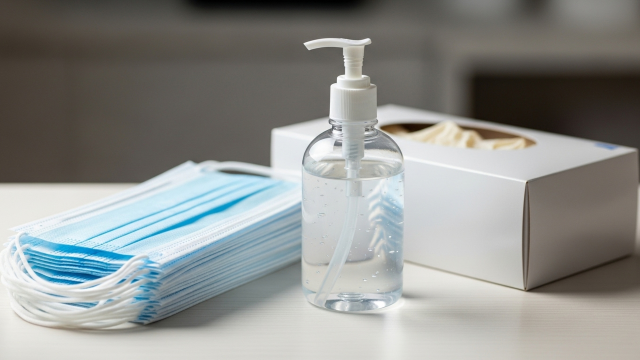
Next, hands and forearms must be thoroughly washed with an approved antimicrobial soap and dried with lint-free towels. Hand sanitizers designed for cleanroom use can also be applied to reduce microbial presence further. Personnel should ensure that fingernails are trimmed and free of polish or residue that could flake off.
It is also recommended that individuals walk over a tacky mat with each foot making contact with the mat 2-3 times. These steps create a base layer that minimizes the chance of external particles reaching the cleanroom gowning area. Proper preparation ensures the subsequent gowning process maintains its effectiveness.
Gowning for a cleanroom should always follow a top-down approach, starting with items that cover the head and progressing downward to minimize particle shedding. The main garments include coveralls, hoods, boot covers, and gloves.
Throughout this process, all attire should be made of lint-free and non-shedding materials. These fabrics prevent fibers from entering the cleanroom air. Used garments should be disposed of according to facility procedures or sent for proper laundering and re-sterilization to maintain the cleanroom’s cleanliness levels.
Facial and hair cleanliness is vital in controlling contamination since hair, skin cells, and oils are among the most common sources of particulates. Hairnets, beard covers, and face masks are standard in most cleanrooms and must be applied correctly.
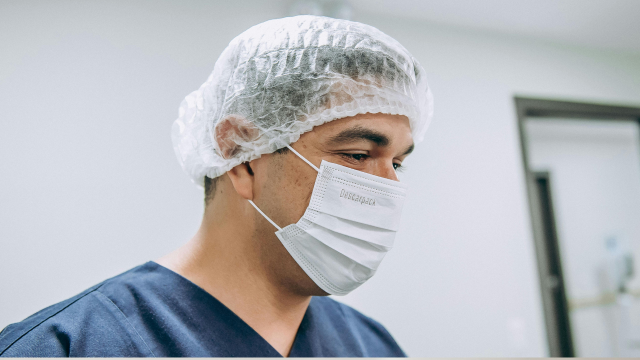
The hairnet should cover all hair completely, including sideburns and stray strands. For individuals with facial hair, beard covers or hoods with integrated facial protection are required. Face masks should be placed over the nose and mouth, adjusted to form a tight seal without gaps. Touching the exterior of the mask after placement should be avoided.
Some industries may have additional requirements, such as double masking or the use of powered air-purifying respirators (PAPRs) in higher-class environments. Personnel with long hair should tie it securely before covering it, ensuring it remains contained at all times.
Gloves are among the most critical elements of cleanroom attire. They protect both the wearer and the environment by preventing skin oils and microorganisms from contaminating products or surfaces.
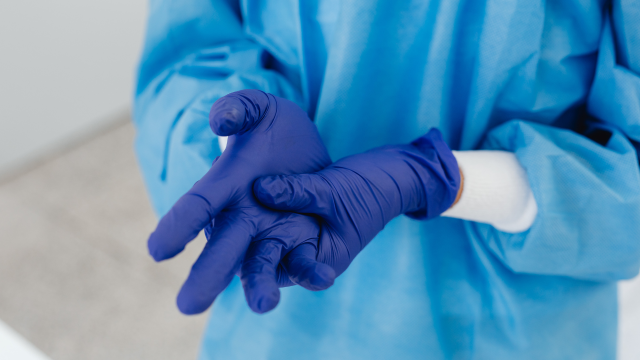
Donning gloves requires precision. Cleanroom gloves should be donned after putting on gowns but before entering the controlled space. Hands must be sanitized again immediately before gloving. Grasp the glove only at the cuff, avoiding contact with the palm or fingers. Once worn, the cuff should be tucked under the sleeve of the coverall to create a continuous protective barrier.
When removing gloves, roll them off slowly from the wrist outward to prevent contamination of the hands. In many cleanrooms, double-gloving is recommended for added protection, especially in environments that handle hazardous materials or biological agents.
Additional protective equipment, such as goggles, face shields, or respirators, may also be necessary depending on the cleanroom classification and industry. These items should be applied after the main garments are donned and sanitized appropriately between uses.
After gowning, personnel should proceed into the airlock or anteroom, where airflow helps remove residual particles before full entry into the cleanroom. Movement should be slow and deliberate to prevent disturbing settled particles.
When exiting, personnel should remove garments in the reverse order of gowning, starting with gloves and finishing with shoe covers or hoods. Contaminated items should be placed in designated disposal bins. Exiting too quickly or removing garments improperly can reintroduce contaminants to the controlled area.
It is also essential to avoid common mistakes such as adjusting masks or scratching skin inside the cleanroom, as these actions can release particles. Consistency in following entry and exit procedures preserves the cleanroom’s controlled environment and ensures product safety.
Maintaining a cleanroom requires more than just proper gowning; it demands ongoing training, adherence to protocols, and regular monitoring. All personnel should receive continuous education on contamination control, gowning updates, and equipment handling.
Routine audits and visual inspections can help identify areas for improvement, while refresher training sessions keep staff aligned with the latest industry standards. Strict attention to protocol not only maintains compliance with ISO and GMP requirements but also improves long-term efficiency.
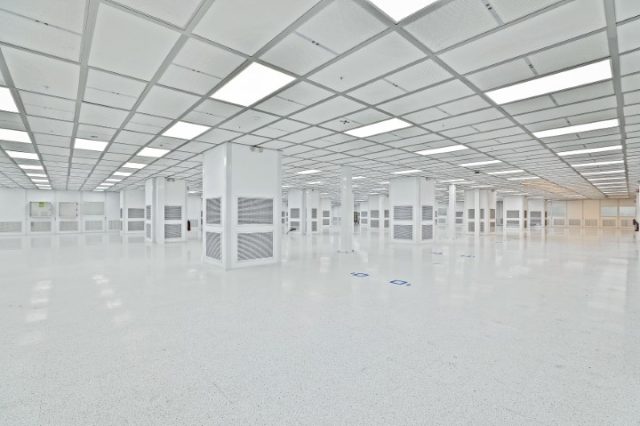
Modulus Cleanrooms supports organizations in upholding these standards by providing high-quality modular cleanroom systems designed for flexibility, scalability, and compliance. Our cleanroom solutions make it easier for businesses to maintain the cleanliness levels necessary for sensitive operations.
Proper gowning is one of the most effective defenses against contamination in controlled environments. Each step, from pre-gowning to exiting procedures, contributes to maintaining the integrity and performance of the cleanroom. By following these protocols and investing in regular training, personnel ensure that operations remain consistent, compliant, and safe.
Modulus Cleanrooms continues to lead in delivering advanced cleanroom designs that support these essential standards of safety and efficiency. Contact us today to discuss how we can help you build your dream cleanroom!