

At Modulus Cleanrooms, we understand that cleanrooms are high-stakes environments where precision, sterility, and safety are non-negotiable. Whether used in biotechnology, electronics, or life sciences, cleanroom laboratories rely heavily on specialized equipment that must meet rigorous performance and safety standards.
To ensure compliance, protect product integrity, and maintain a safe working environment, specific lab equipment must undergo regular certification. Certification validates that this equipment performs within acceptable parameters set by industry, government, and safety organizations. Without it, labs risk contamination, research failures, and costly operational downtimes.
Certification isn’t just about checking off a compliance box. In cleanroom laboratories, it’s a preventive strategy. It ensures that equipment operates as designed, maintains required environmental standards, and doesn’t pose a threat to research accuracy or personnel safety.
Several organizations set the benchmarks for certification, including the NSF (National Sanitation Foundation), ISO (International Organization for Standardization), and OSHA (Occupational Safety and Health Administration). These certifications often need annual or bi-annual renewals and must be carried out by trained professionals using calibrated tools.
A certified piece of equipment offers peace of mind that your lab is operating under conditions that support reproducibility, reduce liability, and align with regulatory inspections, especially for FDA-audited facilities.
One of the most critical pieces of equipment in any biological cleanroom is the biosafety cabinet (BSC). These enclosures are designed to protect both the user and the environment from exposure to infectious agents or hazardous biological materials.
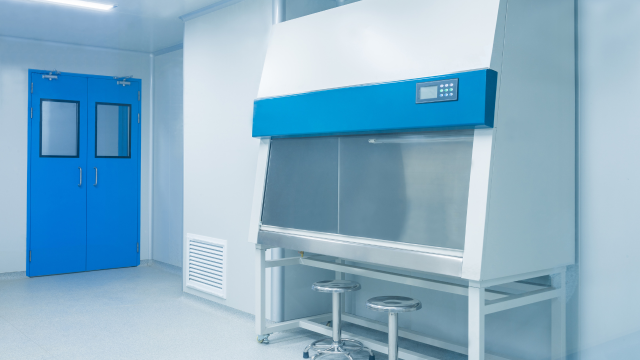
There are different classes of biosafety cabinets—Class I, II, and III—each with specific certification requirements. For instance, Class II BSCs must be tested for airflow velocity, HEPA filter integrity, and containment capabilities.
Without certification, biosafety cabinets may fail to prevent cross-contamination or allow biological agents to escape. This risk is especially high in labs that deal with cell cultures, DNA manipulation, or microbial pathogens.
Regular certification checks ensure that filters are intact, fans are functioning correctly, and airflow patterns meet the specified safety parameters. These certifications usually align with NSF/ANSI Standard 49 guidelines and must be done at least annually.
Fume hoods are another essential item in any lab that handles chemicals. These devices work by drawing air away from the workspace and either filtering or venting it externally, depending on the type of hood.
Whether it’s a ducted or ductless fume hood, certification ensures the device is correctly removing harmful vapors and protecting lab personnel from inhaling toxic substances. The testing process typically involves checking airflow velocity, face velocity uniformity, and containment performance.
Fume hood certifications often align with standards from the American National Standards Institute (ANSI) and the American Industrial Hygiene Association (AIHA). An untested or out-of-certification hood could result in chemical exposure, making certification not just a legal formality but a lifesaving step.
Laminar flow hoods—used for sterile procedures like compounding medications or preparing media in microbiology labs—require equally rigorous certification. These hoods provide a continuous stream of filtered air, which helps protect samples from airborne contaminants. The equipment must be tested for HEPA filter efficiency, airflow velocity, and particle count levels.

Because these units are vital in environments that demand zero contamination, such as IV preparation, any compromise in function can lead to product recalls, failed experiments, or even patient harm. Certification confirms that the airflow remains within ISO Class 5 (or cleaner) levels and meets USP 797 and 800 regulations.
Autoclaves are critical for sterilizing tools, glassware, and even some types of media. Improperly functioning autoclaves can leave pathogens and spores alive, which can invalidate lab results or, worse, pose infection risks. Autoclave certification involves testing for temperature consistency, steam penetration, and pressure control.
The certification process often includes a biological indicator test, which confirms whether the autoclave can destroy even the most heat-resistant organisms. Routine certification is especially essential in medical research labs and biotech companies where sterility is not negotiable.
While not standalone equipment, HVAC systems in cleanrooms deserve special mention. These systems are vital for maintaining the cleanroom classification, temperature, humidity, and pressure levels. At the heart of these systems are HEPA and ULPA filters, which must be certified for particle retention efficiency.
Cleanroom HVAC certification ensures that the airflow design minimizes turbulence and that the air pressure differential prevents contamination from entering cleaner zones. Any compromise in airflow or filter integrity can downgrade the room’s ISO classification and lead to contamination. Most cleanrooms require HVAC certification at least once a year. The tests typically involve particle counts, air change rates per hour, and filter leak tests.
In labs where temperature, humidity, and CO₂ levels must remain constant, such as tissue culture labs or stability testing labs, incubators and environmental chambers must be certified to ensure internal conditions meet strict tolerances.
Certification tests include temperature uniformity, CO₂ concentration accuracy, and humidity levels. A minor deviation can drastically affect biological samples, delay drug development timelines, or skew long-term testing results.
Manufacturers may provide internal calibration tools, but independent certification by a third-party lab ensures objectivity and compliance with audit standards.
Precision balances are often overlooked when considering lab certifications, but these devices are foundational in research and development. Whether weighing chemical reagents or quantifying compound formulations, even a tiny deviation can lead to significant errors.
Certification for lab balances involves calibrating the equipment against known weights using certified test masses. This process is typically guided by National Institute of Standards and Technology (NIST) standards. In regulated environments, such as FDA-audited labs, maintaining a certification log for each balance is crucial.
Certification should only be performed by trained professionals using calibrated testing instruments. Many labs choose to work with third-party cleanroom certification providers who specialize in controlled environments and understand the importance of ISO classifications, GMP compliance, and NSF standards.

These providers offer comprehensive reports, test data logs, and certificates that not only keep labs compliant but also offer a defensible paper trail during audits. Working with a certification specialist also allows labs to troubleshoot equipment before problems arise, minimizing downtime and avoiding costly repairs.
The frequency of equipment certification depends on several factors, including usage, manufacturer recommendations, and industry regulations. However, a common rule of thumb is annual certification, with additional checks after major repairs, relocations, or system upgrades.
In high-risk or high-use environments, such as research and development, semi-annual certification may be required. Labs need to maintain a certification schedule and retain detailed logs as part of their quality assurance protocols.
Certification of vital lab equipment is a foundational pillar of quality assurance in cleanroom labs. From biosafety cabinets to fume hoods and precision balances, each certified piece of equipment contributes to maintaining the integrity, safety, and reliability of lab operations.
Ignoring certification requirements or postponing them can lead to significant consequences, including contamination, regulatory violations, and operational delays. Investing in regular, professional equipment certification isn’t just a compliance measure—it’s a proactive strategy that supports excellence in research, product development, and patient safety.
At Modulus Cleanrooms, we emphasize the importance of proper equipment certification as part of a complete cleanroom strategy. Whether you’re designing a new cleanroom or managing an existing facility, make equipment certification a top priority. Your lab’s performance and its reputation depend on it. Contact us today to discuss your modular cleanroom goals!